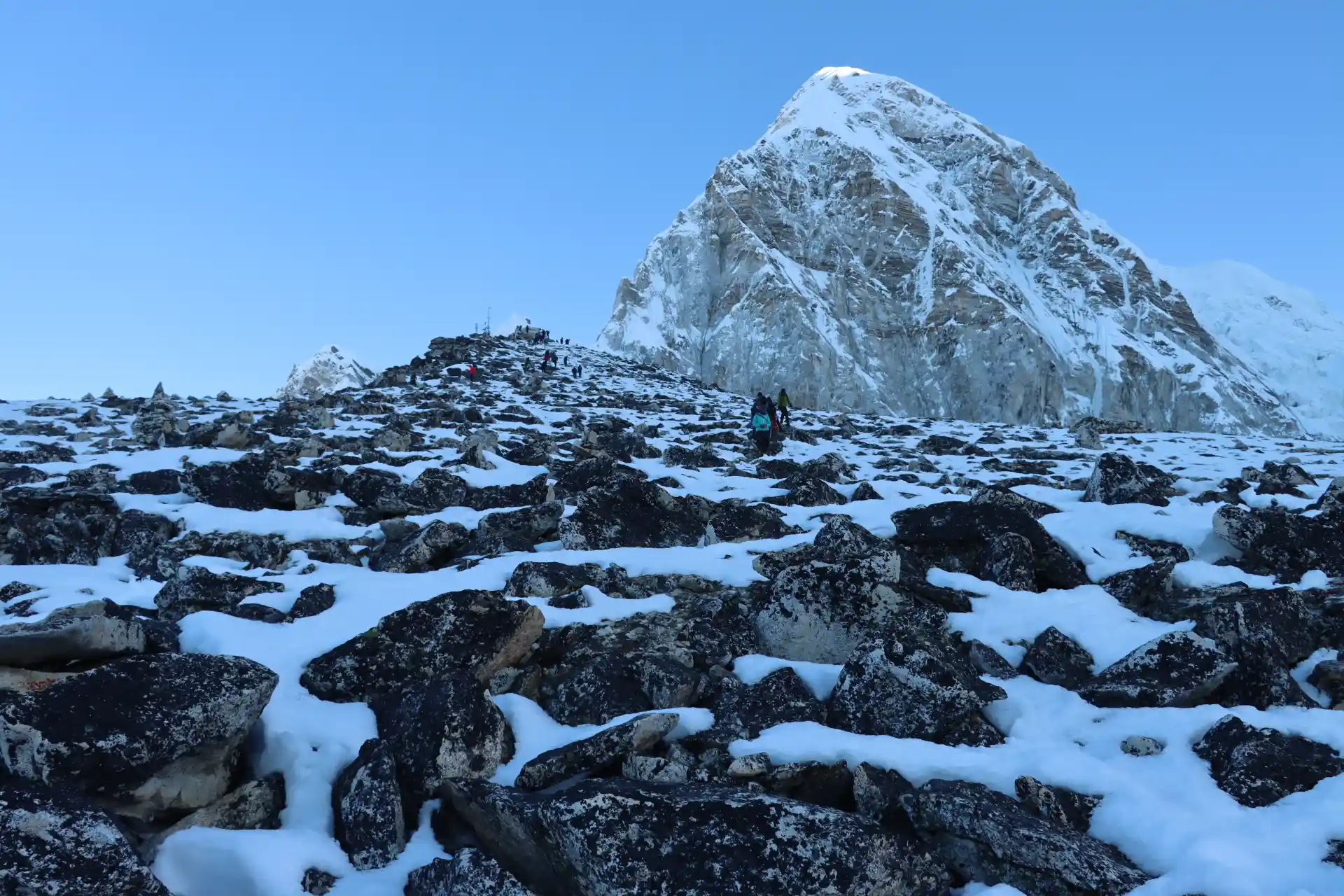
Trekking to Everest Base Camp is the kind of adventure that gets under your skin. The Sherpa villages, the prayer flags snapping in the wind, the moment Everest finally appears above the ridge at Tengboche, it's genuinely one of the most special trails on the planet.
But if you're managing Type 1 diabetes, the idea of pushing yourself to 5,364 metres can feel pretty daunting.
Altitude messes with your body in ways that make blood sugar control a lot more unpredictable. Add in cold nights, long hiking days, a suppressed appetite, and the fact that you're a very long way from the nearest hospital, and yeah, it's a lot to think about.
But here's the thing: loads of people with Type 1 diabetes have done the Everest Base Camp trek, and many have gone on to tackle even bigger Himalayan challenges after that.
The difference between a safe, successful trek and a stressful one usually comes down to preparation. Not fitness. Not luck. Just knowing what you're getting into and planning for it properly.
Before diving in, here's what this guide will help you navigate: how altitude affects your blood sugar, insulin storage in the cold, CGM accuracy issues, the right pace for your itinerary, and the warning signs that mean it's time to head down.
Can You Really Trek to Everest Base Camp with Type 1 Diabetes?
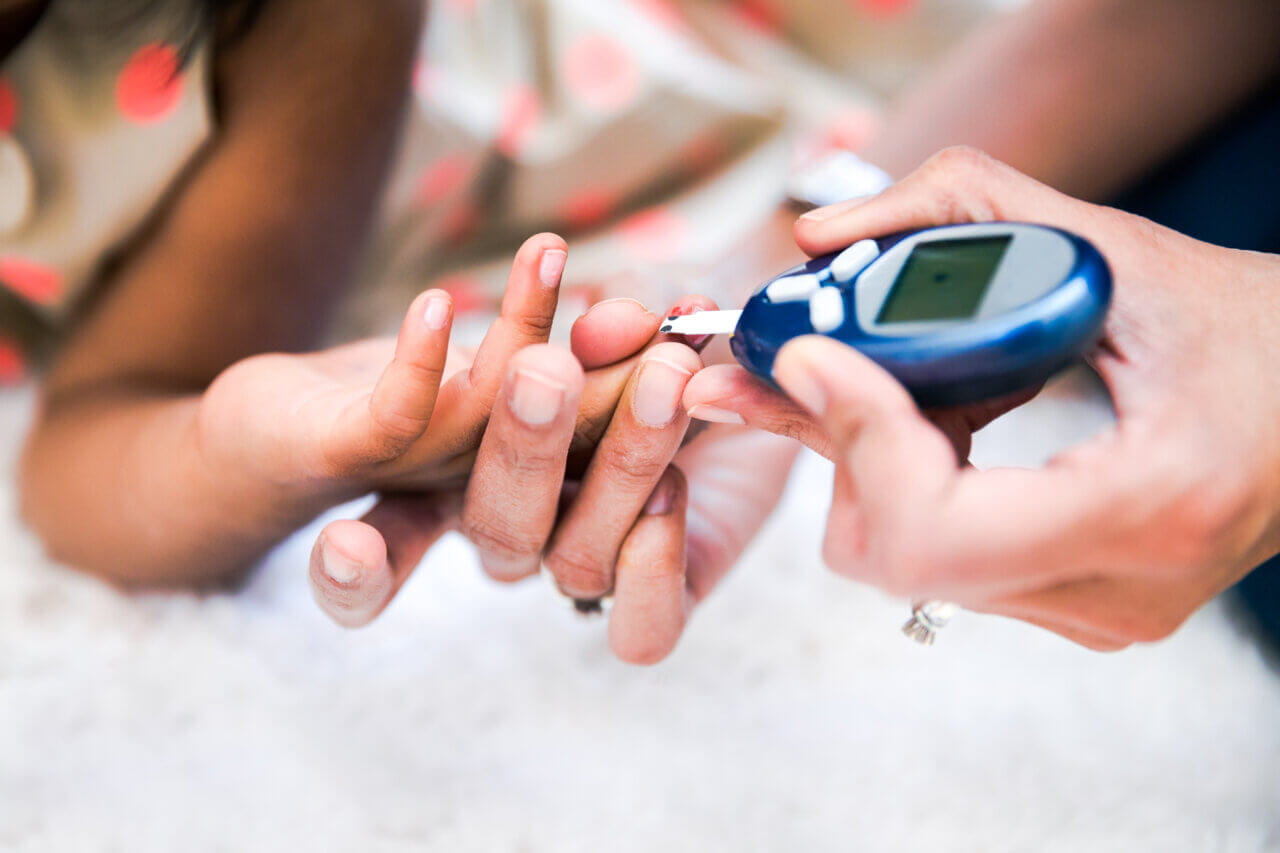
Yes, absolutely. However, it's not something you want to undertake without being honest with yourself first.
The biggest factor isn't how fit you are or how motivated you are. It's how well you manage your diabetes day to day. Before you start planning your flights to Kathmandu, ask yourself a few tough questions:
- Is your diabetes reasonably stable most of the time?
- Do you understand how exercise affects your blood sugar?
- Are you comfortable adjusting your insulin when things go a bit sideways?
- Have you travelled with all your diabetes gear before?
Everest Base Camp is not the place to figure things out as you go. It's remote, the altitude is serious, and a small problem can turn into a big one very fast.
For people who've been recently diagnosed or are still working to get things stable, a lower-altitude trek like Langtang or Annapurna Base Camp might actually be a smarter starting point. Build your experience, then take on EBC.
What does high altitude do to blood sugar and insulin?
High altitude is a game-changer when it comes to managing your diabetes, even if you're experienced and well-prepared. Above 3,000 metres, your body is under physical stress even when you feel perfectly fine. Here's what that actually means in practice:
- Exercise lowers your blood sugar: the long hiking days mean your glucose can drop faster than usual, especially on steep ascents
- Stress hormones spike: cortisol and adrenaline flood your system at altitude, and both push glucose up unpredictably
- Appetite drops off: eating less means less carbohydrate intake, which can throw your whole insulin routine out of whack
- Dehydration concentrates your glucose: you're sweating more than you think at altitude, and not drinking enough makes blood sugar harder to control
- AMS symptoms can look just like hypoxia: headache, nausea, fatigue, and confusion are common to both, which makes things genuinely complicated
The result is that your blood sugar can swing in ways you've never experienced before. Frequent monitoring isn't optional here; it's the thing that keeps you safe.
What the Cold Does to Your Insulin and Devices
The cold is its own problem on top of all that. At places like Dingboche and Gorak Shep, nighttime temperatures can drop well below freezing. That's bad news for your kit:
- Insulin can freeze, and frozen insulin is useless. The worst part? It looks completely normal. You won't know it's been damaged until your glucose stops responding to corrections.
- CGMs and blood glucose meters start giving wrong readings: cold interferes with the sensors and the electrochemical reactions they rely on
- Batteries drain much faster: keep spares warm and close to your body
The golden rule: never leave your insulin in your pack overnight. It goes inside your sleeping bag, near you, every single night without exception.
Getting Medical Clearance - Who You Need to Talk To
Before anything else, you need to get clearance from your medical team. This isn't about being overly cautious; it's just good sense for a trek at this altitude with Type 1 diabetes.
The people you want on your side before you leave:
- Your endocrinologist: they know your insulin history, your patterns, and what adjustments make sense for sustained high-altitude exercise
- A travel medicine doctor: vaccines, altitude-related risks, and what to do if things go wrong in a remote area
- A high-altitude specialist: especially worth seeking out if this is your first time above 4,000 metres
What to Actually Cover in Your Pre-Trek Appointment
Don't walk out of that appointment with just a thumbs-up. Push for specific guidance on:
- How to adjust insulin during long hiking days: Exercise increases insulin sensitivity, so many trekkers need less insulin, but altitude stress can push glucose up at the same time. Your doctor can help you figure out the balance.
- Ketone and DKA risk at altitude: if you're not eating much or feeling unwell, ketone buildup becomes a lot more serious when you're days from a hospital. Know how to test, and know what to do.
- Emergency medications: glucagon kit, anti-nausea medication, backup insulin delivery method, antibiotics for stomach bugs
- Whether Diamox is right for you: acetazolamide helps with acclimatisation, but it's a diuretic and affects fluid and electrolyte balance. Definitely worth a specific conversation for T1D.
- How to tell AMS from a blood sugar problem: the symptoms overlap badly. Your doctor can give you a personal protocol for sorting one from the other.
Don't Forget Written Medical Clearance for Your Insurance
A lot of people skip this and then regret it. Most travel insurance providers require you to disclose Type 1 diabetes as a pre-existing condition. Having written clearance from your doctor can make a big difference when you're trying to get a claim approved, especially for helicopter evacuation, which can cost thousands of dollars in Nepal without proper coverage.
Sort this out before you leave. It's a lot harder to argue with an insurance company from a teahouse at 4,400 metres.
Don't Make Everest Base Camp Your First High-Altitude Trek
If you've never trekked at altitude with Type 1 diabetes before, EBC is not the place to start.
Even if you're fit, your body may not be ready for:
- Long days of hiking back-to-back
- A significantly reduced appetite
- Cold nights with temperature drops you haven't experienced before
- The way altitude stress affects blood sugar in ways that exercise alone never does
- Changes in sleep quality and hydration that compound everything else
Build Up with Lower-Altitude Treks First
Multi-day treks between 3000m and 4,500 metres are a great way to learn how your glucose behaves in trekking conditions without pushing into extreme altitude. Options like the Langtang Valley trek or Annapurna Base Camp give you real experience without the same level of risk.
What you want to figure out before EBC:
- How much insulin do you need on long hiking days
- How your appetite changes with elevation and sustained exercise
- How cold affects your CGM and meter readings
- What monitoring schedule actually works for you on the trail
Knowing all this going into EBC makes a massive difference. You're not experimenting in a remote environment; you're applying a system you've already tested.
Managing Blood Sugar on the EBC Trail
Managing your glucose on the trail is about being consistent, not being perfect. Things will go sideways occasionally; that's just altitude. The goal is to have a system that catches problems early before they become serious.
Strategies That Work for Type 1 Diabetes Trekkers
- Trek slowly: Rushing increases fatigue, spikes stress hormones, and makes glucose swings much harder to predict. Slow is safe.
- Snack little and often: Don't wait until your blood sugar crashes. Small snacks every 60–90 minutes keep things much more stable than big meals with gaps in between.
- Don't overcorrect highs: Insulin sensitivity changes at altitude, corrections that work at sea level can send you low fast. Go cautiously.
- Check your glucose more often than you think you need to: Above 4,000 metres, most T1D trekkers are checking 6–8 times a day. CGMs help, but don't replace finger pricks up here.
- Monitor ketones if you feel rough: Nausea and reduced appetite are common at altitude. If you're not eating and feeling unwell, check your ketones.
Most T1D trekkers on EBC aim to run slightly higher glucose targets than usual, which gives a buffer against hypos during long walking days. Just make sure you've always got fast-acting sugar on your person, not buried in your pack.
How to Store Insulin on the Everest Base Camp Trek
This is the one thing you really can't mess up. Insulin is destroyed below 0°C – and at Dingboche, Lobuche, and Gorak Shep, nighttime temperatures regularly drop to −10°C or lower.
The problem with frozen insulin is that it looks perfectly fine. You can't tell by looking at it. You only find out it's been damaged when your blood sugar stops responding to corrections, by which point you've already dosed incorrectly.
5 Rules for Keeping Insulin Safe on the Trail
- Body carry during the day: Keep your active insulin in an inner chest pocket directly against your skin. Your body temperature at 37°C is your most reliable heat source - more reliable than any bag or pouch.
- Sleeping bag every single night: No exceptions. Insulin, spare pens, and your CGM transmitter go into a small pouch inside your sleeping bag near your torso. Every night, no matter how tired you are.
- Carry a Frio wallet: These evaporative pouches are marketed for keeping insulin cool in the heat, but they also insulate against cold. Worth having on the trail even in winter.
- Store backup vials properly: Spare insulin should be in a soft insulating pouch inside your main pack, never in an external side pocket exposed to wind.
- Inspect every morning: Before you dose, look at your insulin. Any cloudiness, crystals, or clumping means it's been compromised. Switch to your backup immediately.
How much to bring: Work out your total daily dose, multiply by your trek days, then add at least 50–100% on top as a reserve. There are no pharmacies above Namche Bazaar. This is not a calculation to be conservative about.
Using a CGM or Insulin Pump at High Altitude
Your CGM Gets Unreliable Above 4,000 Metres
Your CGM, whether it's a Dexcom, Libre, or Medtronic, is really valuable on the trail. But above 4,000 metres, you can't trust it the way you do at home. Three things cause problems:
- Cold slows down the sensor. CGMs are validated for 10–40°C. Below that, the electrochemical reaction slows, and readings start drifting low.
- Less oxygen affects accuracy. The sensors use a glucose oxidase enzyme that needs oxygen to work. At altitude, where oxygen is thin, the readings can be systematically off.
- Reduced skin blood flow. Cold causes your peripheral vessels to constrict, which slows the interstitial fluid movement that the CGM reads, meaning the lag between your actual glucose and what the sensor shows gets longer.
The practical upshot: always carry a calibrated blood glucose meter as a backup, and never make a significant dosing decision above 4,000 metres based on your CGM alone without a finger-prick confirmation.
Pump or MDI - Which Is Better for EBC?
This is a question we get a lot, and the honest answer is that for most T1D trekkers, MDI (multiple daily injections) is the simpler, lower-risk approach on EBC.
Pumps have real advantages where you can adjust basal rates by the hour, which is genuinely useful when altitude and exertion are both pulling your glucose in different directions. But they also come with cold-related risks: tubing can freeze, batteries drain faster, and a pump failure at 4,500 metres is a much bigger problem than a frozen pen.
If you use a pump and want to keep using it on EBC, that's absolutely fine. Just make sure you carry a complete MDI backup system regardless. And keep the pump insulated against your body at all times.
The Best EBC Itinerary for Trekkers with Type 1 Diabetes
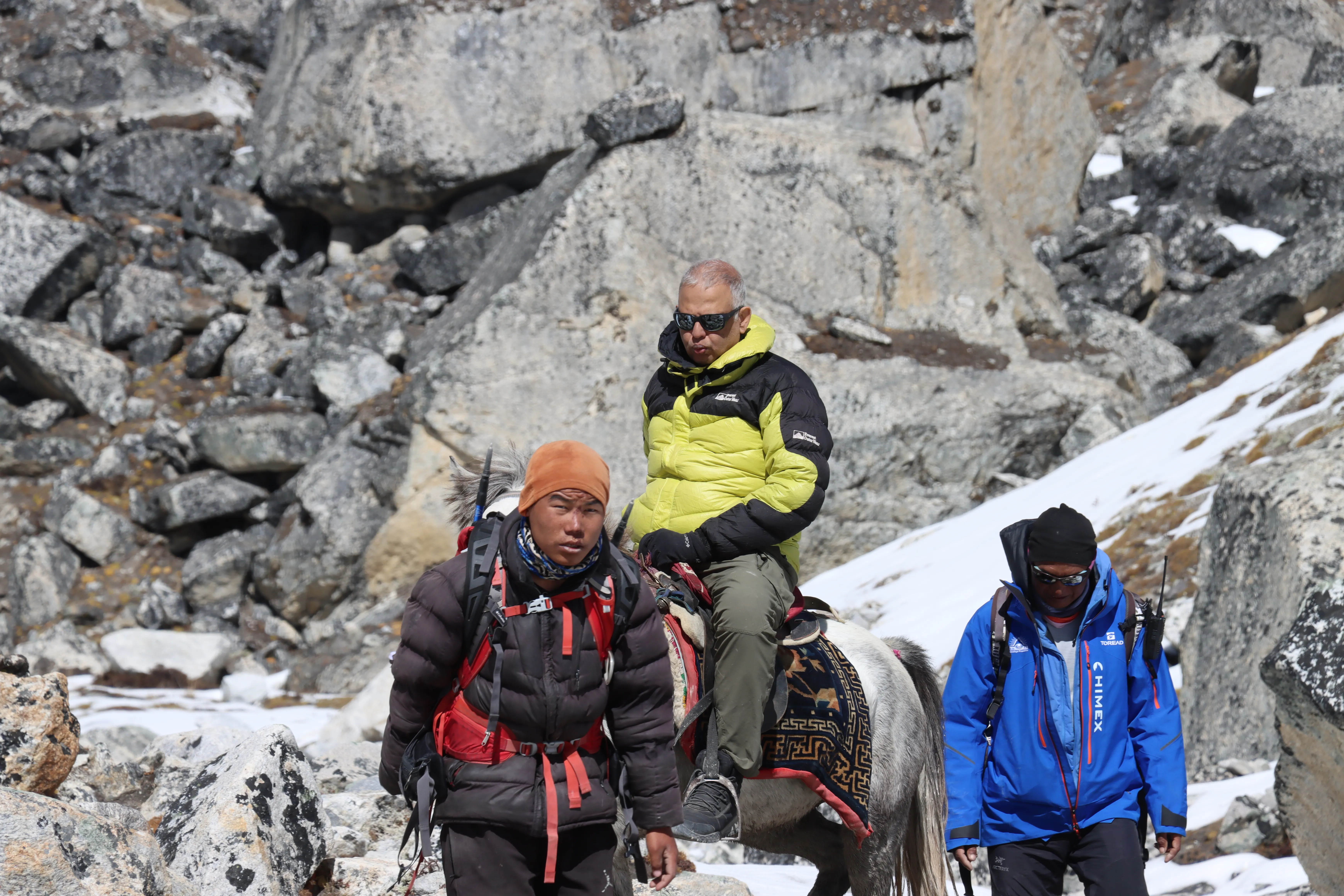
The itinerary you choose matters just as much as the gear you pack.
Most standard EBC itineraries are built for healthy trekkers who want to reach Base Camp in the shortest possible time, often 12 days or fewer. For someone managing insulin, blood sugar swings, cold exposure, and altitude stress all at once, that pace creates a lot of unnecessary risk.
Why Standard Itineraries Are Too Fast for T1D
Above 3,000 metres, your body is working hard even when you feel fine. Stack on top of that:
- 5-7 hours of hiking per day
- Lower oxygen levels affect everything from energy to sensor accuracy
- Freezing nights put your kit at risk
- Appetite dropping off right when you need consistent carbohydrate intake
- Dehydration from sweat and the dry mountain air
Rush all that, and your blood sugar goes haywire. Stress hormones spike harder with faster ascent. AMS risk goes up. And when AMS symptoms look identical to hypoglycaemia, you want as much clarity as possible - not more confusion.
What a Diabetes-Friendly EBC Itinerary Looks Like
The safer approach for T1D trekkers is to build in extra acclimatisation days and plan for 14–16 days total rather than trying to squeeze the trek into 12. Here's what that extra time actually buys you:
- Rest days where you're not gaining altitude - crucial for letting your insulin routine settle
- Time to see how your body responds before pushing higher
- Room to adjust your doses gradually as altitude increases
- Space to deal with a bad glucose day without falling behind the schedule
- Better sleep quality, which directly affects blood sugar stability
It's not about taking it easy - it's about giving yourself the best chance of getting to Base Camp and back safely. The trekkers who push through on fast schedules are often the ones who have to turn around at Dingboche.
What to Pack - Diabetes Supplies for Everest Base Camp
This is not an area to cut corners. The rule of thumb for any T1D trekker is to bring 2-3 times more supplies than you think you'll need. Here's what that actually means:
Core Diabetes Supplies – Apply the Double Backup Rule
- Insulin - at least 2-3 × your calculated trek dose, multiple vials
- Syringes or pen needles - plus backups
- Pump supplies if applicable - reservoirs, tubing, infusion sets, all with backups
- CGM sensors - extras, plus the transmitter kept warm
- Blood glucose meter plus test strips - bring far more strips than you expect to use
- Ketone strips - non-negotiable for remote high altitude
- Glucose tablets and gels - spread across multiple pockets, not all in one place
- Glucagon emergency kit - and make sure your guide knows where it is and how to use it
There are no medical supplies available above Namche Bazaar. If you run out up there, you're in trouble. This isn't a place to travel light on your diabetes kit.
Keeping Devices Running in the Cold
Power banks: teahouses higher up charge extra for electricity, and power cuts happen.n
Spare batteries: they drain much faster than normal in the cold
Keep all electronics in inner pockets overnight: same rule as insulin
Managing Diabetes in Teahouses Along the EBC Trail
Teahouse life on the EBC route is simpler than most people expect. Menus are limited but reliable, and once you know what to order, the carbohydrate management is actually pretty manageable.
Food and Carbs That Are Consistent
Dal bhat (rice with lentil dal and vegetables) is available at almost every teahouse on the trail. It's a good option for T1D trekkers because most places offer unlimited refills. If you bolus for a full plate and get served less, you can ask for more rice to match your dose. That's more carbohydrate flexibility than you'd get at most restaurants back home.
Other reliable options: noodle soups, fried rice, eggs, and pancakes. Appetite drops as you go higher, so keep familiar snacks on hand - things you'll actually want to eat even when you're not hungry.
Hydration - More Important Than You Think for T1D
Dehydration concentrates your blood glucose and makes it a lot harder to control. Drink regularly throughout the day - hot tea, soups, purified water. Aim for 3-4 litres per day above 3,500 metres.
Always treat water with purification tablets or a filter. Stomach bugs at altitude with T1D are a serious complication, not just an inconvenience.
Charging Your Devices
Solar charging is available in most teahouses, but it becomes more expensive and less reliable as you go higher. Bring a good-sized power bank and charge everything every night - don't assume you'll be able to top up when you need it.
Should You Hire a Guide for EBC with Type 1 Diabetes?
For most T1D trekkers, yes, a guide is genuinely worth it, not just nice to have.
A good guide does a lot more than navigate the trail. They can help with:
- Keeping an eye out for early symptoms that might indicate a glucose problem or AMS
- Adjusting the pace when you need to slow down without making it a big deal
- Sorting out teahouse accommodation and meals so you're not dealing with logistics when you're tired
- Making clear-headed decisions in an emergency when you might not be in a position to
A porter is also worth considering. Carrying a heavy pack is a significant source of physical stress, and reducing that stress means more stable blood sugar and a lot less fatigue. When you're managing an extra layer of medical complexity, having someone else carry the heavy load is a genuinely smart decision.
Brief your guide before you leave Kathmandu. Spend ten minutes explaining what hypoglycaemia looks like, where your emergency glucose is stored, and what you need from them if something goes wrong. A guide who understands your condition is one of the most valuable safety nets you have on the mountain.
Telling the Difference Between a Hypo and Altitude Sickness
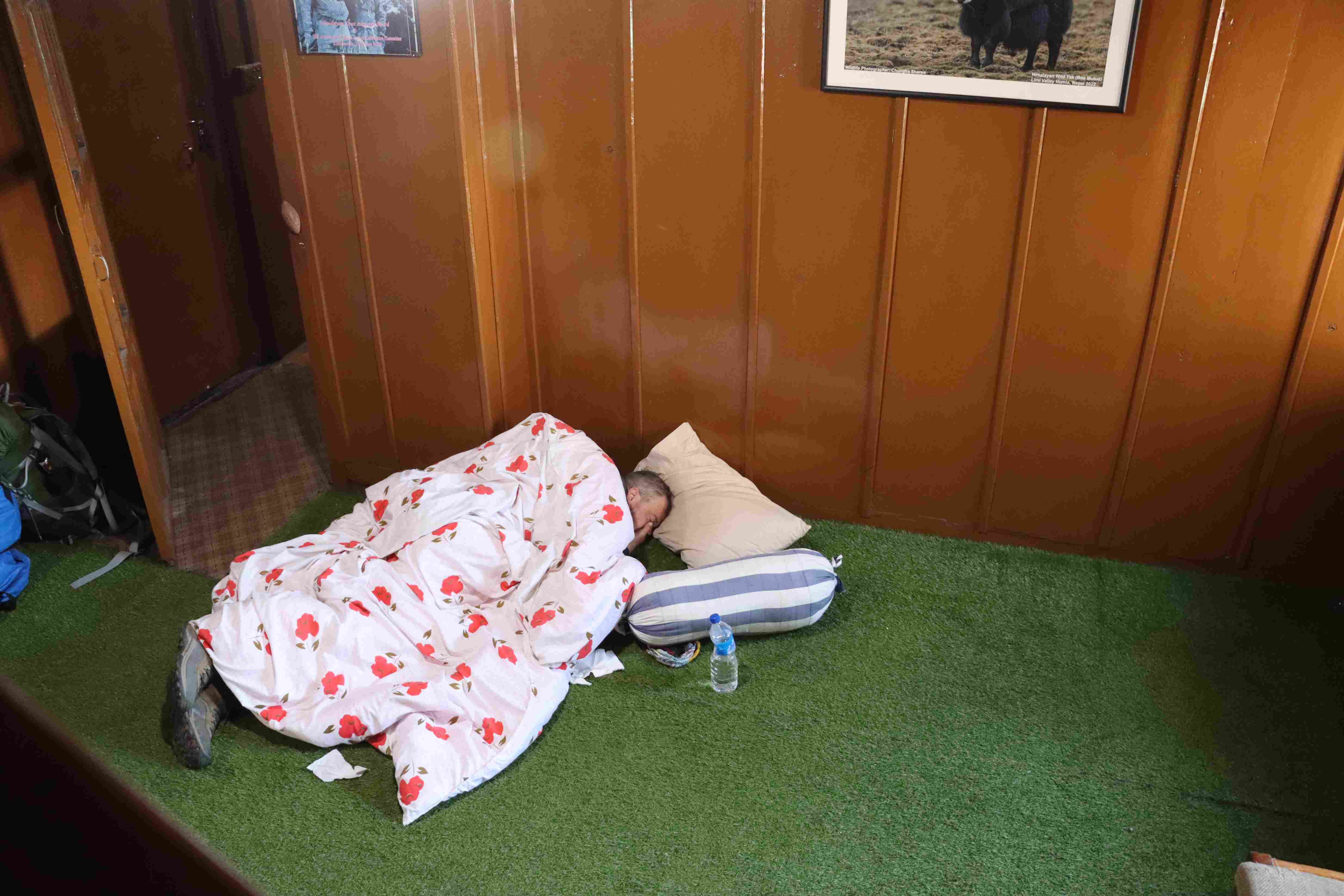
This is honestly one of the trickiest parts of trekking EBC with Type 1 diabetes, and it's worth understanding really clearly before you go.
Hypoglycaemia and acute mountain sickness (AMS) share a frightening number of symptoms. Headache, nausea, fatigue, and confusion - they can all cause these. Getting this wrong has real consequences.
Here's the practical way to split them:
- Sweating is a hypo sign. AMS doesn't usually cause profuse sweating unless you're working hard physically.
- Shaking and tremors point to a hypo. They're not typical of AMS.
- The resolution test is your best tool. Take 15g of fast-acting carbohydrates and wait 15 minutes. If it's a hypo, you'll start feeling better quickly. If it's AMS, you won't - and now you know what you're dealing with.
- Check your blood glucose immediately. A BGM reading is the definitive answer. Don't guess when you have a meter in your pocket.
The rule we tell all our T1D trekkers: when in doubt, treat for a hypo first, then reassess. A bit of extra glucose when you actually have AMS won't hurt you. Missing a hypo because you thought it was AMS is a much bigger problem.
Your Emergency Plan - Know When to Turn Back
Every T1D trekker heading to EBC should have a written descent protocol agreed with their doctor before they leave. Not a vague sense of "I'll turn back if things get bad" - a specific list of conditions that trigger an immediate descent.
Here are the conditions that mean you need to go down:
- Blood sugar below 3.5 mmol/L (63 mg/dL) that doesn't respond to fast carbs within 20 minutes
- Blood sugar above 17 mmol/L (306 mg/dL) with moderate or large ketones on a urine strip
- Serious AMS symptoms – loss of coordination, altered mental state, severe breathlessness at rest
- CGM and blood glucose meters are failing, with no backup available
- Insulin supply failure, you can't cover within 4 hours
- Your guide or trekking partner is seriously concerned about your safety
Descending 300–500 metres resolves most altitude emergencies quickly. The mountain isn't going anywhere. Come back next season if you have to. Hesitating when your body is telling you to go down is the decision you don't want to make at 5,000 metres.
Travel Insurance - Non-Negotiable
Your insurance needs to cover:
- Type 1 diabetes is explicitly listed as a pre-existing condition
- Trekking to 5,500 metres or above
- Helicopter evacuation from altitude
- Hospital treatment in Nepal
Helicopter rescues in Nepal can cost several thousand dollars without proper coverage. Don't start packing until you've sorted your insurance.
The Bottom Line
Trekking to Everest Base Camp with Type 1 diabetes is absolutely possible, but don't go in thinking it's business as usual. High altitude makes blood sugar genuinely harder to manage, and the remote nature of the Khumbu means you need to be a lot more prepared than you would be for most adventures.
The trekkers who do well aren't the ones who push through regardless. They're the ones who plan properly, carry reliable backup, monitor consistently, and are willing to make adjustments when their body is asking for them.
Everest isn't about proving anything. It's about trekking with a bit of sense, respecting what your body is dealing with in that environment, and giving it the support it needs to get you there and back safely.
With the right medical team behind you, a sensible itinerary, and the right attitude, this can genuinely be one of the most rewarding adventures of your life, Type 1 diabetes and all.